
Bitcoin ETFs Face Uphill Battle to Break Even
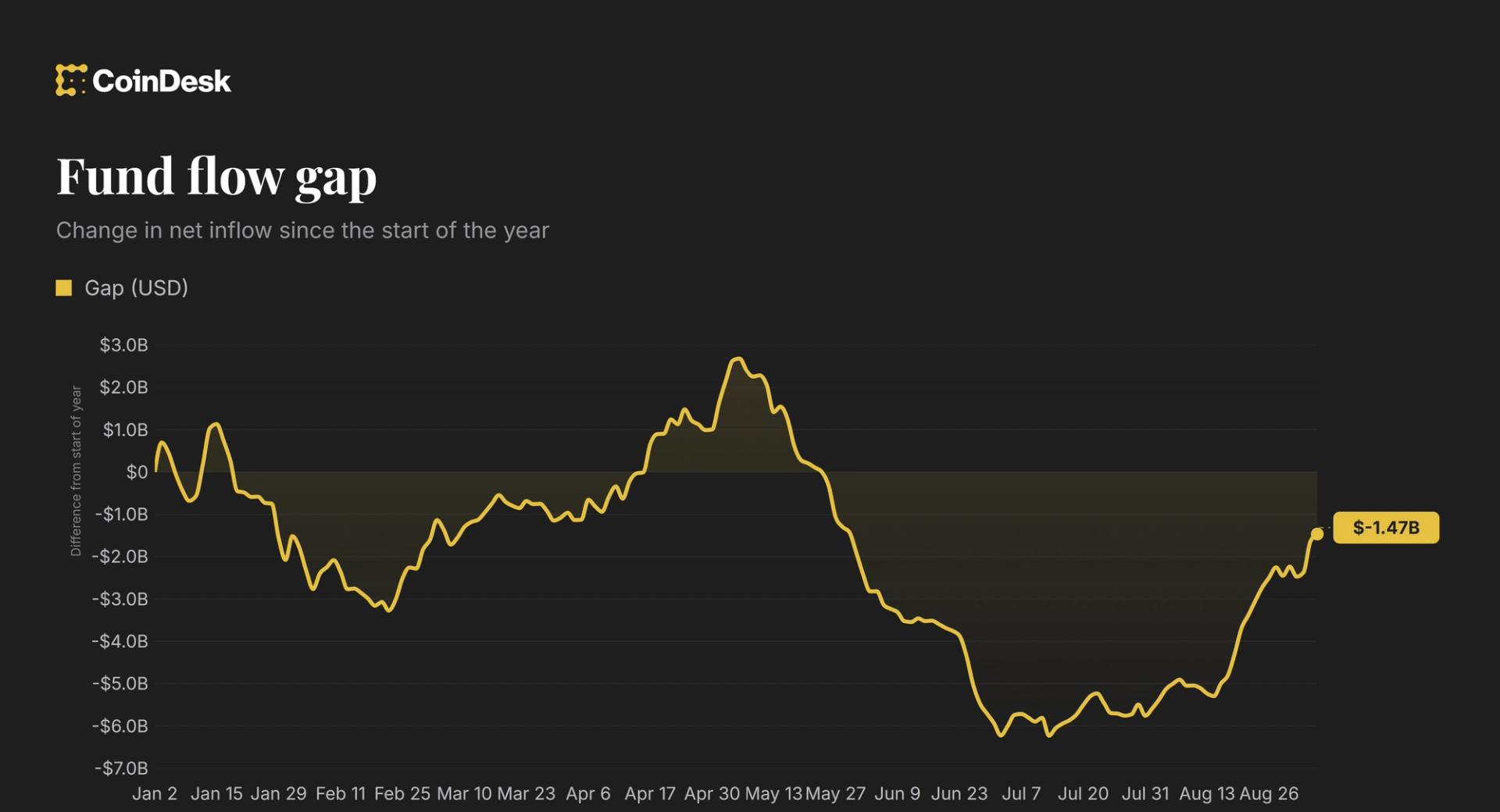
As the cryptocurrency market continues to navigate its latest cycle, investors are keeping a close eye on the performance of Bitcoin exchange-traded funds (ETFs). According to recent data, these funds are still $1 billion shy of breaking even in 2026, highlighting the challenges they face in the current market environment.
Bitcoin ETFs have been a popular choice for investors seeking to gain exposure to the cryptocurrency market without directly holding the underlying asset. These funds allow investors to buy and sell shares that track the price of Bitcoin, providing a more traditional investment experience.
However, the performance of Bitcoin ETFs has been underwhelming in recent years. Despite the growing popularity of cryptocurrencies, these funds have struggled to keep pace with the broader market. This has led to concerns among investors about the viability of these products in the long term.
One of the main reasons for the underperformance of Bitcoin ETFs is the high fees associated with these products. Unlike traditional ETFs, which often have low expense ratios, many Bitcoin ETFs charge significantly higher fees due to the complexities of tracking a volatile cryptocurrency like Bitcoin.
Another factor contributing to the underperformance of Bitcoin ETFs is the lack of liquidity in the underlying market. Bitcoin is a highly liquid asset, but the market for Bitcoin ETFs is much smaller, making it more difficult for these funds to buy and sell shares efficiently.
Despite these challenges, some investors remain optimistic about the potential for Bitcoin ETFs to break even in the future. As the cryptocurrency market continues to evolve, these funds may become more attractive to investors seeking to gain exposure to the space.
What's Behind the Underperformance?
There are several factors contributing to the underperformance of Bitcoin ETFs. One of the main reasons is the high fees associated with these products. Unlike traditional ETFs, which often have low expense ratios, many Bitcoin ETFs charge significantly higher fees due to the complexities of tracking a volatile cryptocurrency like Bitcoin.
Another factor contributing to the underperformance of Bitcoin ETFs is the lack of liquidity in the underlying market. Bitcoin is a highly liquid asset, but the market for Bitcoin ETFs is much smaller, making it more difficult for these funds to buy and sell shares efficiently.
Additionally, the performance of Bitcoin ETFs has been impacted by the overall market environment. The cryptocurrency market has been subject to significant volatility in recent years, making it challenging for these funds to maintain a stable value.
Furthermore, the regulatory environment for Bitcoin ETFs has been a major concern for investors. The Securities and Exchange Commission (SEC) has been slow to approve new Bitcoin ETFs, leading to a lack of competition in the market and higher fees for investors.
What's Next for Bitcoin ETFs?
As the cryptocurrency market continues to evolve, investors are keeping a close eye on the performance of Bitcoin ETFs. Despite the challenges facing these funds, some investors remain optimistic about their potential for growth.
One potential catalyst for the growth of Bitcoin ETFs is the increasing adoption of cryptocurrencies by institutional investors. As more institutions become comfortable with investing in cryptocurrencies, the demand for Bitcoin ETFs may increase, leading to improved performance and lower fees.
Another potential catalyst for the growth of Bitcoin ETFs is the development of new products that offer more competitive pricing and better performance. As the market for Bitcoin ETFs continues to evolve, investors may see the introduction of new products that better meet their needs.
Ultimately, the future of Bitcoin ETFs will depend on a variety of factors, including the performance of the underlying market, the regulatory environment, and the level of competition in the market. As investors continue to navigate the complexities of the cryptocurrency market, it will be essential to monitor the performance of Bitcoin ETFs and adjust their investment strategies accordingly.
Key Takeaways
- Bitcoin ETFs are still $1 billion shy of breaking even in 2026.
- The high fees associated with Bitcoin ETFs are a major contributor to their underperformance.
- The lack of liquidity in the underlying market is another factor contributing to the underperformance of Bitcoin ETFs.
- Regulatory uncertainty has been a major concern for investors in the Bitcoin ETF space.
- Increasing adoption of cryptocurrencies by institutional investors could be a catalyst for the growth of Bitcoin ETFs.
Conclusion
The performance of Bitcoin ETFs has been underwhelming in recent years, but investors remain optimistic about their potential for growth. As the cryptocurrency market continues to evolve, it will be essential to monitor the performance of these funds and adjust investment strategies accordingly.
Ultimately, the future of Bitcoin ETFs will depend on a variety of factors, including the performance of the underlying market, the regulatory environment, and the level of competition in the market. By staying informed and adapting to changing market conditions, investors can make more informed decisions about their investments in the Bitcoin ETF space.